Wildlife Watching, Birding and Photography Tours in Sorong city, Malagufuk of Klasouw valley of Sorong regency, Klabili and Sausapor in Tambrauw, Waigeo and Batanta in Raja Ampat of West Papua as well as Sonder, Tomohon, Mount Mahawu, Manado, Bunaken National Park, Tangkoko Nature Reserve in North Sulawesi. Please, contact me (Charles Roring) by e-mail to: peace4wp@gmail.com or by whatsapp to: +6281332245180
I often organize tours for photographers who want to take pictures of paradise birds in tropical rainforest of West Papua of Indonesia. The places that we visit include Sorong city, Sausapor, Klabili, Malagufuk, and Waigeo of Raja Ampat, as well as Arfak mountains in Manokwari regency.
King Bird of Paradise
Magnificent Riflebird
Birds of Paradise that can be seen and photographed in their natural habitat include: Lesser Birds of Paradise, King Bird of Paradise, King Bird of Paradise, Magnificent Riflebird, Twelve-wired Bird of Paradise, Western Parotia, Magnificent Bird of Paradise, Black Sicklebill, Superb Bird of Paradise, Trumpet Manucode, Glossy-mantled Manucode, Red Bird of Paradise, and Wilson's Bird of Paradise.
Twelve-wired Bird of Paradise
Participants can also see and photograph other birds such as Red-breasted Paradise Kingfisher, Common Paradise Kingfisher, Rufous-bellied Kookaburra, Yellow-billed Kingfisher, Sacred Kingfisher, Beach Kingfisher, Yellow-faced Myna, Golden Myna, Eclectus Parrot, Large Fig Parrot, Eclectus Parrot, Sulphur-crested Cockatoo, Palm Cockatoo, Yellow-capped Pygmy Parrot, Red-cheeked Parrot, Coconut Lorikeet, Violet-necked Lory, and a lot more.
Red Bird of Paradise
To do the bird photography trip, participants need to bring D-SLR camera with large sensor plus telephoto lens such as the Sigma Sports 150 to 600 mm or Tamron G2 150-600 mm.
Lesser Bird of Paradise
The recommended entry point for bird photography tour is Sorong city or Manokwari city in the Republic of Indonesia. Participants need to come in a group of two to four or more to share the cost.
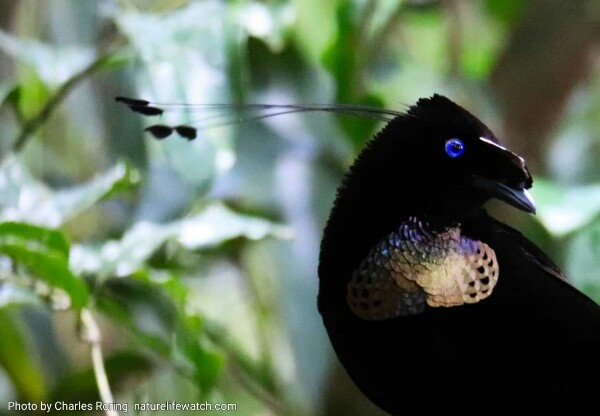
Western Parotia
This paradise bird tour can be combined with a birdwatching tour to a Wallace region (transitional zone from Asia to Australia), especially to North Sulawesi Province of Indonesia.
p.s. Photos in this article were taken by my clients and me during our previous tours.
BIRDWATCHING AND SIGHTSEEING TOUR IN MINAHASA PENINSULA
Minahasa peninsula in North Sulawesi Province of Indonesia is a highly recommended destination for visitors who are interested in watching tropical birds of Wallace region (the transitional zone between the continent of Asia and Australia) which is the habitat of a lot of unique tropical birds of Sulawesi island.
Pale Blue Monarch
The rainforest and farmland of Minahasa is the habitat of such birds as:
Sulawesi Hanging Parrot
Sulawesi Pygmy Woodpecker
Ashy Woodpecker
Gray-sided Flowerpecker
Yellow-sided Flowerpecker
Crimson-crowned Flowerpecker
Sulawesi Fantail
Zebra Dove
Sulawesi Cuckoo-dove
White-faced Cuckoo-dove
Maroon-chinned Fruit Dove
Gray-cheeked Green Pigeon
Green Imperial Pigeon
Rock Pigeon
Black-crowned White-eye
Warbling White-eye
Sahul Sunbird
Crimson Sunbird
Brown-throated Sunbird
Turquoise Flycatcher
Pale Blue Monarch
Black-naped Oriole
Collared Kingfisher
Scaly-breasted Kingfisher
Sulawesi Lilac Kingfisher
Green-backed Kingfisher
Sooty-headed Bulbul
Slender-billed Crow
Sooty-headed Bulbul
White-browed Crake
Barred Rail
Buff-banded Rail
Barn Swallow
Sunda Teal
Cattle Egret
Little Egret
Cinnamon Bittern
Finch-billed Myna
White-breasted Woodswallow
Ivory-backed Woodswallow
Barn Swallow
Gray-rumped Treeswift
Sulphur-bellied Whistler
Brush Cuckoo
Chestnut Munia
Scaly-breasted Munia
Black-faced Munia
Glossy Swiftlet
Purple Needletail
Hair-crested Drongo
Sulawesi Drongo
Red-backed Thrush
and etc.
Red-backed Thrush
Birding sites that can be explored by visitors include Mount Mahawu, Lake Linow, Pine Forest, The hill forest, farmland and paddy field of Subdistrict Sonder.
Yellow-billed Malkoha
More birds could be watched if we explore lowland and lower montane forest in Talawaan waterfall and farmland; and in Tangkoko Nature Reserve. Birds such as Sulawesi Pygmy Hornbill, Knobbed Hornbill, Purple-winged Roller, Black-naped Fruit Dove, Maroon-chinned Fruit Dove, Great-billed Kingfisher, Sulawesi Myna, and etc.
Scaly-breasted Munia, Gray-sided Flowerpecker, Sulawesi Blue Flycatcher, Sulawesi Hanging Parrot
If you are interested, please, contact me (Charles Roring) by whatsapp to: +6281332245180 or by e-mail to: peace4wp@gmail.com.
Tropical rainforest of West Papua has been an important destination for visitors who are interested in watching birds of paradise and wild animals.
From 27 August to 10 September, I guided a Russian birdwatcher, on a 2-week birdwatching, wildlife watching, snorkeling and sightseeing tour in bird's head region of West Papua in the Republic of Indonesia. His name was Dmitry Ivanov and he flew in from South Korea.
Day 1 (27 August 2022)
I met my client Dmitry at DEO airport of Sorong city. He flew from Seoul of South Korea. After taking a few hours rest in a hotel in Sorong and enjoying lunch, we began our birdwatching activity in mangrove forest around 45 minutes ride to the suburb of the city. There, we saw Pacific Swallow, Orange-fronted Fruit Dove, Sahul Sunbird (formerly called Olive-backed Sunbird). Suddenly rain started to fall. We walked back to the car and had some tea and biscuits while waiting for it to stop. After the rain we still did birdwatching again and saw Oriental Dollarbird, Rainbow Bee-eater, Great-billed Heron, Willie Wagtail, Sacred Kingfisher, Yellow-faced Myna, Helmetted Friarbird. It was already dark when we returned to the city. We had dinner at Padang Restaurant. The food was spicy.
Birding Raja Ampat
Day 2 (28 August 2022)
In the morning, we left for Waisai. The ferry boat was crowded with people. All tickets were sold out. There were a big group of Christians from Supiori who made a pilgrimage tour to their fellow Christian community in Waisai town. However, I urged a porter to arrange a seat for my client with the captain of the boat. We got 1 VIP ticket at an extra charge and an economy ticket.
Arriving in Waisai, we continued our trip by speedboat to a beach resort. We still had time to enjoy birding that day. We saw Papuan Frogmouth, Pied Imperial Pigeon, Willie Wagtail, Lesser Frigatebird, Tern, Helmetted Friarbird, Sulphur-crested Cockatoo, Sacred Kingfisher, and Glossy Manucode (which is a Bird of Paradise). Back to the resort, we had a nice view of Palm Cockatoo sitting on the branch of a cattapa tree over the white sandy beach. It was eating its fruits.
Wilson's Bird of Paradise
Day 3 (29 August 2022)
We woke up early at 04:00 and had some tea and bread. After that we left the resort by boat to a beach in Kabui bay where we continued our trip by hiking steep slopes for one and a half hour to the site of Wilson's Bird of Paradise. We arrived around one and a half hour later. We watched the paradise bird until eight o'clock. When we returned to the beach we saw Dusky Scrubfowl, Brahminy Kite, Eclectus Parrot, Sulphur-crested Cockatoo, Pacific Swallow, Willie Wagtail, White-bellied Sea Eagle. We had a stop at Saporkren village and enjoyed some interactions with villagers. In the resort, we took pictures of Papuan Frogmouth.
In the afternoon, by speedboat we went to Raflow resort to enjoy birding. There, we saw Red Bird of Paradise, White-breasted Woodswallow, Variable Goshawk, Claret-breasted Fruit Dove, Rainbow Lorikeet, Palm Cockatoo, Mimic Meliphaga, Hooded Butcherbird, Dwarf Fruit Dove, Yellow-faced Myna, Eastern Osprey, Helmetted Friarbird, Eclectus Parrot, Sulphur-crested Cockatoo, Pinon Imperial Pigeon, Mimic Meliphaga, Pink-spotted Fruit Dove, Red-cheeked Parrot, Spangled Drongo.
Red Bird of Paradise
Day 4 (30 August 2022)
We woke up in the morning again and had a short hiking to the lek of Red Bird of Paradise. In the same site, we watched Helmetted Friarbird, Spangled Drongo, Hooded Butcherbird. After watching paradise bird we still enjoyed birding in the area and saw Grey-headed Goshawk, Spangled Drongo, Rusty Mouse Warbler. We walked down the slope and did birding walk along the road where we watched Rufous-bellied Kookaburra, Glossy-mantled Manucode, Claret-breasted Fruit Dove, Brown headed Crow, Coconut Lorikeet, Eclectus Parrot, Pied Imperial Pigeon, Sulphur-creasted Cockatoo, Yellow-faced Myna, Blyth's Hornbill, Glossy-mantled Manucode, Pinon Imperial Pigeon, Torresian Crow.
In the afternoon at 15:00, we left for Friwen to enjoy snorkeling and seeing coconut crab on a small island not far from it. The Friwen wall was a great snorkeling site for seeing soft corals as well as hard corals and a lot of tropical fish.
Because coconut crab only came out at night, we decided to move to Nyetreiram islet at 18:00 local time. The land owner who accompanied us cut some coconuts and left it on the islet to attract the coconut crabs. We waited at the jetty of the islet. Fifteen minutes later, they came out of their hiding places. We were invited to see them. We were watching and taking pictures of the crab for around twenty minutes when we felt strong winds blew on the sea. A big storm was coming. When we were back on the boat, the waves were getting bigger. I asked our boat driver Zeth whether it was ok to return to our beach resort or take cover in Gam island. He said we could return to the resort. We decided to go back in full speed. Soon after we arrived, the sea storm hit our beach. Fortunately, we were already on land and inside our warm cottage. It was a great experience.
Day 5 (31 August 2022)
Birding in the morning along the road, we were able to watch: Black Butcherbird, Hooded Butcherbird, Mimic Meliphaga, Red Bird of Paradise, Eclectus Parrot, Sulphur-crested Cockatoo, Red-cheeked Parrot, Pinon Imperial Pigeon, Variable Goshawk, Lowland Peltop, Pacific Reef Heron, Brown-headed Crow, Torresian Crow, Claret-breasted Fruit Dove, Oriental Dollarbird, Olive-crowned Flowerpecker.
A Chinese photographer, Phang, joined us. Because I forgot my binoculars, he was glad to lend his binoculars. We enjoyed watching and photographing birds. Phang returned to the guesthouse earlier whereas I and Dimitry continued walking to the area of Raflow resort where he photographed Eastern Reef Egret near the resort.
Klasow Valley of Sorong Regency
We left Raja Ampat at 14:00 and arrived in Sorong at around 16:00. I went to supermarket to buy more food materials and then continued our trip to Klasow valley by 4WD car. We arrived at around 19:00. The rain started to fall. We continued walking along a wooden bridge for around three hours. We saw frog, lizard, grasshopper, cricket, moths, and bandicoot. Arriving in the village at 22:00, we had dinner and took a rest. I was very tired but could not sleep well.
Klasow Valley
Day 6 (1 Sept. 2022)
We woke up at 05:00 and then started to make preparation. We watched Western-crowned Pigeon, King Bird of Paradise, Frilled Monarch, Blue Jewel Babbler, Pinon Imperial Pigeon, Rainbow Lorikeet, Papuan Lorikeet, Sacred Kingfisher, Yellow-faced Myna. There were calls of Yellow-billed Kingfisher. Unfortunately, we could not see it. At around 12:00 we returned to the village and had lunch. After that we took a rest. At 16:00, we did a birding walk along the bridge where we saw Hooded Pitta, Brown Oriole, Black Lory, and some other beautiful birds of Sorong's lowland forest. Blyth's hornbill flew over the forest several times. There were hibiscus flowers in the village. I took some pictures of them.
Day 7 (2 Sept. 2022)
We woke up at 04:00 and then made a preparation. After having some tea and biscuits, we walked to the lek of Twelve-wired Bird of Paradise. It was a long walk. Walking up a steep slope, we saw wallaby. I aimed my flashlight at the marsupial animal. With the light, Dmitry could take pictures of the wallaby. The male Twelve-wired Bird of Paradise was already on top of his display tree when we arrived. We watched him performing the "pole dance" for around thirty minutes before continuing our trip to watch the Lesser Birds of Paradise. We stayed there until 09:00. In addition to Twelve-wired Bird of Paradise and the Lesser Birds of Paradise, we were able to watch Glossy-mantled Manucode, Red-breasted Paradise Kingfisher, Blyth's Hornbill, Shining Flycatcher, Sulphur-crested Cockatoo.
Twelve-wired Bird of Paradise
Lesser Birds of Paradise
At around 10:00, we slowly returned to the village and had our lunch. After that we took a rest until around 14:00. In late afternoon, we walked along the boardwalk to watch birds including Yellow-faced Myna, Sulphur-crested Cockatoo and Papuan Babbler. I played the sound of Hooded Butcherbird. Several minutes later he showed up.
We saw some interesting birds including Golden Myna, Orange-bellied Fruit Dove, Red-cheeked Parrot, and Oriental Dollarbird. We waited for the cassowary to visit the village but we did not see it. In late afternoon, we walked back to main road. It was drizzling. Reaching the main road, we saw that the parking lot was still empty. So we continued birding along the road. Wompoo Fruit Dove flew fast crossing the road over the canopy of the forest. There was an Orange-bellied Fruit Dove perching on the top branch of a tree. When our car arrived, we ended our birding in Klasow valley and returned to Sorong where stayed one night at Swissbel hotel.
Arfak Mountains
Day 8 (3 Sept. 2022)
We flew to Manokwari in the morning of 3 Sept 2022. However, we did not go directly to Arfak range. We had to go to a supermarket to buy food materials for our 6 days stay in the mountains. After that, we went to traditional market in Wosi to buy more fruits, vegetables and eggs.
The duration of the car trip from Manokwari city to Arfak mountains was approximately 2 hours. Unloading our bags and food supplies from the 4WD car, we brought them to Lorikeet guesthouse. We did not take a rest. There was still time to watch Vogelkop Bowerbird. Because the nearest blind was only around 5 minutes walk, we immediately went to it. Dmitry was able to see the Vogelkop Bowerbird and took some picturws of the bird. Back to the guesthouse, we were able to see some nice birds including Green-backed Robin and White-shouldered Fairywren. There was a tall tree in the middle of the flower garden of the guesthouse. There, Great Cuckoo Dove liked to eat its fruits.
Day 9 (4 Sept. 2022)
We woke up at 04:30 and made preparation as well as had some tea and biscuit. At 05:00 we started hiking up the steep slope of Mount Soyti. It took around twenty minutes to reach the birdwatching hut of Western Parotia. Inside it, Dmitry sat to wait for the paradise bird to come. Becuase villager had put a red pandanus fruit near the dancing ground of Western Parotia, other birds came to eat the grain of the fruit too. There was a female Western Parotia. And there were also female black sicklebill.
After watching the parotia, we did general birding along the road. We saw Capped-white Eye, Ornate Melidectes, Sclater's Whistler, Mountain Fruit Dove, Olive-crowned Flowerpecker, Olive Flycatcher, Western Smoky Honeyeater.
During nightwalk, we saw tree frog, mouse, and stick insect. We heard wing beats of flyingfox but we could not locate the tree where he feeded on.
Day 10 (5 Sept 2022)
At 04:00 we woke up to make preparation and to have a quick breakfast. We had some bread, rambutan fruits, and tea. Dmitry, accompanied by two villagers went to the site of Magnificent Bird of Paradise. It took around one hour twenty minutes of walking to reach it. He returned at around 10:30 with smiling face. Dmitry was able to make pictures and a short video of the paradise bird. In the afternoon, he returned to the site of Western parotia again. He wanted to watch the adult Western Parotia performing his courtship dance. However, only the female Black Sicklebill, juvenile Western Parotia that were seen at that site. On a separate site, I saw Spotted Jewel Babbler at the entrance door of the birdwatching hut. We did late afternoon birding walk and saw Grey Green Scrubwren, Green-backed Robin.
Magnificent Bird of Paradise
Day 11 (6 Sept 2022)
As usual during the birding tour, we woke up early in the morning. Our destination this time as Maibri village and our target bird to see was the Crescent-caped Lophorina or Vogelkop Superb Bird of Paradise. The weather that morning was sunny. As a result, we were able to see the paradise bird. At the same site, we also saw Black-eared Catbird, Magnificent Bird of Paradise (male and female), Crinkle-collared Manucode and a female Western Parotia. We heard the sounds of Plum-faced Lorikeets on the canopy of the forest. However, we could not see them. In the afternoon, Dmitry tried to watch the adult male Western Parotia but it did not come to its dancing site.
Vogelkop Superb Bird of Paradise
Day 12 (7 Sept 2022)
I organized a trip for Dmitry to watch Arfak Astrapia in the forest of Syioubri village near a place that was called German Camp. At 02:00 early morning time, by a 4WD car, we went to the village where Dmitry started his guiding trip to the top of the mountains guided by Elyakim. They arrived at around 03:00 and waited for the sunrise. He was able to watch both the Arfak Astrapia and the Black Sicklebill.
In the afternoon, Elyakim offered him an alternative site to watch adult Western Parotia performing his courtship dance performance. Because a bird hide had not been prepared, Elyakim told us that he would build it first. We could go there to watch the bird at 04:00. We went there by 4WD car. It was quite far from Lorikeet Guesthouse. The birding site was located at steep slope in the forest that was inside the territory of Pigout village. We waited for Elyakim to come out of the forest. He showed up at 17:00 and said that the bird had already performed the dance. He had built the hide and offered Dimitry to come and watch it the next day. We agreed to come again the next day at 13:00. Some Sulphur-crested Cockatoo landed on the trees at the edge of a cliff above us. Dmitry took some nice pictures of them using his Nikon Coolpix P1000 camera.
Day 13 (8 Sept. 2022)
At 05:00, we went by 4wd car to Maibri village to watch Masked Bowerbird. Serinus, a local villager, who owned the land, guided us to the birdwatching hut. When we arrived at the hut and entered it, we saw that the bower of the Masked Bowerbird had been demolished. We still sat down in the blind to wait for the bird to complete his demolition works. Unfortunately, he did not come. We returned to our guesthouse and took a rest at 09:00. There were some birds that were seen playing in the flower garden of the guesthouse. Some that I saw were Black Fantail, Blue Grey Robin, Olive-crowned Flowerpecker, Great Cuckoo Dove, Black-billed Cuckoo Dove, Mountain Fruit Dove, Western Smoky Honeyeater, Cinnamon Melidectes, Vogelkop Melidectes, White-shouldered Fairywren, Glossy Swiftlet, Blue Grey Robin, and etc.
In the afternoon, we did a trip to territory of Pigout village to watch Western Parotia. It was a happy moment for Dmitry because he was able to see and made video of the male Western Parotia performing his courtship dance.
At 17:00 we returned to Manokwari city. He stayed at Mansinam Beach Hotel. I stayed at home.
Having Papeda as dinner at the restaurant of Mansinam Beach Hotel. At night, we had Papeda, a kind of porridge made of Sago starch, and yellow fish soup.
Day 14 (9 Sept 2022)
We had a morning flight to Sorong city. After taking a rest and having lunch, we went to mangrove forest recreational park by car. Birding in this mangrove forest, we were able to watch Brown-backed Honeyeater, and White-bellied Cuckooshrike. Suddenly rain started to fall in the area. We sat in.a shelter to wait for it to stop. Fortunately, the rain lasted for only around twenty minutes. We continued birding again while walking along the boardwalk of the mangrove park. We saw Metalic Starling, Rainbow Bee-eater, Olive-crowned Flowerpecker, Olive-backed Sunbird and Nankeen Nightheron. There were several observation towers in the park. They allowed us to see the magnificent few of the mangrove forest. Unfortunately, there were a lot of plastic wastes which were thrown to the forest floor by the visitors. We also saw Orange-fronted Fruit Dove, Pacific Swallow. I played the sounds of Blue Black Kingfisher. He came out but not perched on the visible branch of the mangrove strees. He flew over a water of the canal in front of us and into the forest on its other side. He did it several times.
Dmitry told me that he wanted to watch Emperor Fairywren. I played its soundsany times both in the Mangrove park and in the protected forest of Sorong but the bird did not come out of its hiding places. At around 18:40, we returned to Sorong city. We still had grilled fish at Tembok area for our dinner before returning to Swissbel hotel.
Day 15 (10 Sept. 2022)
At 8:30, I arranged his transfer to DEO airport where he would fly to Jakarta at 10:45. We said goodbye to each other before he entered the check-in hall.
I also left Sorong for Manokwari in the afternoon at 12:45 by Batik Air. It ended the two weeks birdwatching tour in West Papua.
If you are interested in taking a birdwatching tour in West Papua and want me to organize your trip, please, contact me (Charles Roring) by email to: peace4wp@gmail.com or through whatsapp by pressing this chat button.
Birdwatching and Butterfly Watching Tour in Subdistrict Sonder, Minahasa Highland
Subdistrict Sonder, located in the heart of Minahasa Highland in North Sulawesi, Indonesia, is a hidden gem for nature lovers and wildlife enthusiasts. Known for its lush landscapes, cool climate, and rich biodiversity, Sonder offers a perfect destination for birdwatching and butterfly watching. Whether you're an avid birder, a butterfly enthusiast, or simply someone seeking tranquility in nature, this picturesque area has much to offer.
Sulawesi Myzomela
### A Unique Location for Nature Exploration
Sonder lies at the foot of Mount Lengkoan, an area known for its volcanic soil, tropical forests, and diverse flora and fauna. The region is part of the greater Minahasa Highlands, famous for its stunning natural beauty, which includes waterfalls, crater lakes, and hot springs. The cool mountain air and varied altitudes make Sonder an ideal habitat for a wide range of bird and butterfly species.
Birdwatching in Sonder is a fantastic experience, as the area is home to numerous endemic and migratory species. Whether you're a novice or an experienced birder, the mix of lowland forests, montane ecosystems, and agricultural land offers a diverse range of habitats that attract an impressive variety of birds.
### Birdwatching in Sonder: A Paradise for Avian Enthusiasts
Sonder’s birdlife is among the most diverse in the region. The cool climate of the highlands provides a habitat for both endemic species and migratory birds. Among the most sought-after birds in this area are the **Sulawesi Myzomela** (*Myzomela chloroptera*), an iconic bird of the Sulawesi highland, and the **Yellow-billed Malkoha** (*Rhamphococcyxchalyorhynchus*). Additionally, birdwatchers can spot a range of other species, such as the **Sulawesi Blue Flycatcher** (*Cyornisomissus*), **Black-crowned White-eye**, and a variety of kingfishers, warblers, and eagles.
For those with keen eyes and patience, Sonder is a prime location for observing rare and endemic species. The combination of montane forests and diverse ecosystems supports a wealth of avian life, making it a top spot for birdwatching tours. Local guides, who are experts in the region’s birdlife, can lead you through the trails, helping to spot and identify different species.
Some butterflies in Sonder: Blanchard's Wood Nymph, Manado Yellow Tiger and Blandchard's Wood Nymph
### Butterfly Watching: Discover the Colors of Nature
In addition to birdlife, Sonder is an excellent place for butterfly watching. The region's lush forests and abundant flowers attract a variety of butterfly species, making it a photographer’s dream. The area's biodiversity supports more than 100 species of butterflies, with some particularly stunning and rare species to be found.
Among the more remarkable butterflies seen in Sonder are the **Lime Swallowtail** (*Papiliodemoleus*), the **Blanchard's Ghost Butterfly** (*Ideablanchardii*), and the **Blanchard's Wood Nymph** (*Ideopsis vitrea*). These butterflies are often spotted flitting around the wildflowers, dense undergrowth, and forest clearings. The most vibrant butterflies tend to be found in the early morning or late afternoon when the air is cool and calm, making for optimal viewing conditions.
Butterfly watchers can stroll along the quiet trails of Sonder’s forests, where they might encounter butterflies in various stages of life – from caterpillars to chrysalises to fully grown adults. These trails also offer a chance to observe the intricate relationships between butterflies and their environments, from the plants they feed on to the role they play in pollination.
### Eco-Tourism and Conservation Efforts
As interest in birdwatching and butterfly watching grows in Subdistrict Sonder, local communities have embraced eco-tourism as a sustainable way to benefit from their natural resources while preserving the environment. Local guides, many of whom are passionate about wildlife conservation, play an essential role in educating visitors about the importance of protecting Sonder’s ecosystems.
There are efforts to promote responsible tourism that ensures the region’s biodiversity remains intact for future generations. Tour operators and local authorities work closely with environmental organizations to protect key habitats and raise awareness about the need to safeguard the rich biodiversity of the Minahasa Highlands.
### Best Time to Visit
The time to visit Sonder for birdwatching and butterfly watching is all year round. The weather is cool and pleasant, and the trails are more accessible. Early mornings are particularly ideal for birdwatching when birds are most active, while the late afternoon is a great time for butterfly watching, as the warm light makes it easier to spot butterflies and capture beautiful photographs.
Flight route to Manado (the capital of North Sulawesi)
### Practical Information
* **Getting There**: Sonder is accessible from Manado, the capital city of North Sulawesi, which is about 30 kilometers away. Manado can be reached by flight from major cities in Indonesia. From Manado, visitors can take a car or taxi to Sonder, which takes about 1-1.5 hours.
Car route from Manado to Sonder
* **Accommodation**: While Sonder is a relatively quiet area, there are a few guesthouses and homestays that cater to nature tourists. Staying in one of these accommodations offers an authentic experience and provides an opportunity to connect with local culture. Hotels and lodges are available in the nearby Tomohon town.
Marine Tour in Bunaken National Park
After taking this birdwatching and butterfly watching trip in Minahasa Highland, visitors could continue their trip by taking a snorkeling and marine tour in Bunaken National Park with the duration of 3 to 4 days. The activities include marine tour (snorkeling and sightseeing) by boat to Siladen and Bunaken island as well as to sand bank of Nain Atoll.
### Conclusion
Subdistrict Sonder, with its rich biodiversity and serene landscapes, is a must-visit destination for those passionate about birdwatching and butterfly watching. Whether you're trekking through the lush forests in search of rare birds or observing butterflies in their natural habitat, the area provides a unique opportunity to connect with nature. With its commitment to sustainable eco-tourism, Sonder offers a chance to enjoy wildlife in an authentic, environmentally responsible way.
Here are sketches of Red Bird of Paradise (Paradisaea rubra) that I saw while I was guiding tourists in Raja Ampat. The paradise birds like to gather in the top branches of a tree, usually in the mornings between 06.00 and 09.00 and in the afternoons between 15.00 and 17.30. Male ones will perform courtship dances to attract the female birds for mating. The following sketch is now available as prints on various Redbubble products such as t-shirt, sticker, mug, pillow, iPhone case, and a lot more. You could see and order them at this page: A Couple of Red Bird of Paradise
Male and Female Red Bird of Paradise
Each tour participant needs to bring a good pair of binoculars such as Nikon, Swarovski or Leica or any brands that manufacture 10×42 mm, or 12× 50 mm. For taking pictures, a bridge camera such as the Fujifilm HS50 EXR with its 1,000 mm lens will produce significant results. D-SLR cameras with Tamron G2 or Sigma sport 150-600 mm lenses can make quality photos. Point and shoot cameras such as Canon SX60HS, Nikon P900 and Nikon P1000 can also produce good photos if the photographer leans on a wooden post, tree trunk or uses tripod.
Male Red Bird of Paradise
I frequently make sketches of things that I see when guiding tourists on hiking, bird and wildlife watching as well as sightseeing by boat and snorkeling tours. The subjects of my sketches can be birds, butterflies, flowers, electrical or optical devices that I frequently use. I also make drawings of human figures that I post in my other blogs.
If you are interested in traveling to Raja Ampat islands for watching these paradise birds and other tropical birds, and want me to be your guide, please, contact me (Charles Roring) by email to: peace4wp@gmail.com or by text to: +6281332245180 (whatsapp message can also be sent to this number)
Male Western Parotia was performing his ballet dance
Last week I visited Kwau village in Mokwam region of Arfak range. I guided two birding visitors from the United States at that time. Our targets were Western Parotia, Magnificent Bird of Paradise, Black Sicklebill, and Superb Bird of Paradise. During our 5 days of tour in Arfak mountains, we were able to watch them. For us, watching the dance of Western Parotia was in our list of target. To watch the bird, we had to wake up early in the morning at 04.30 to make preparations such as wearing hiking boots or sport shoes, putting all our birdwatching equipment. After drinking tea/ coffee and eating some biscuits, we left our guesthouse in Mount Soyti. We used flashlight because it was still dark. First we walked along the unpaved road for five minutes and then did hiking up steep slopes for fifteen to twenty minutes. When we arrived at the birding ground, we still had to enter a birding hut that had been constructed from corrugated metal roofs for birdwatchers by villagers. To increase our chance of watching the bird, villager put red pandanus fruit on a wooden frame around 5 feet above the ground.
In less than 2 minutes after sitting inside the observation hut, we saw a bird landed on the red fruit. It was a female Superb Bird of Paradise. She began to eat the grains of the red fruit as we turned on our digital cameras and aimed them at the bird. Sunglight had appeared in the sky but had not fully reach the forest floor. In such low light condition, I carefully adjusted my camera and pressed its shutter button several times to shoot the bird. Later, more birds came. They were female Western Parotias. They also ate the fruits.
A dark bird showed up in higher branch of a tree in front of us and started to make calls. It was a male Western Parotia.
Most of his body, tail, and head were covered by black feather. His breast was covered by metalic breast shield. Forehead was triangular white. He had crystal blue eyes and six wire head antennas. Three on each side. He was a beautiful paradise bird.
He hopped to lower branches and hanging vines and then to the ground. He picked up fallen leaves and twigs. While clearing his dancing stage, he did some rehearsals. Suddenly he flew towards the red fruit. The female parotias jumped to nearby by branches. The male parotia ate some grains of the fruits and then returned to his dancing ground again. He picked up some more dry leaves and started to perform his ballet dance. When doing his performance, he expanded his feather to look like skirt. He walked, shaked his head, and did a little jump. In the avian world he is considered as the best ballet dancer.
Male Western Parotia
I made tens of photographs of the paradise bird when he was in the tree, or on the dancing ground. I was amazed by the beautiful dance performance of the male Western Parotia. However, the female Western Parotias that were watching him from higher branches were not so impressed with the performance. They returned to the red fruit, ate its grain and then flew away leaving the male Western Parotia in despair. He called them to come back but they did not. He flew to the fruit, had his breakfast and then disappeared into the thick forest of Arfak mountains. There were still other birds that landed on the same fruit such as the female Black Sicklebill (mother and daughter). Later the female Western Parotias returned to the red fruit, they were chased by a young male Western Parotia and by an adult one.
Our watch indicated that it was 09.10. We decided to wait a little longer with hope that we could watch another dancing show. The male Western Parotia landed on his dancing ground again but he only did some clearing works. We were satisfied with the performance and were happy to leave the birding hut that morning. It had been a fantastic show. - written by Charles Roring
I have just completed a 2-week birding tour in West Papua province of Indonesia. It started in Arfak range of Manokwari and finished in Raja Ampat islands. Three visitors from China, Australia were the participants of the tour. We spent 4 days in higher montane forest, 2 days in lower montane forest of Arfak range, 5 days in Klasow valley and finally 3 days in Waigeo island.
When hiking and birding in higher montane forest, we watched Magnificent Bird of Paradise (Diphyllodesmagnificus), Western Parotia (Parotiasefilata). We also saw a Superb Bird of Paradise for a few minutes when he was eating fruits in Besuei tree. Other birds that we saw in the mountains including Vogelkop Bowerbird (Amblyornisinornata), Green-backed Robin, Blue-grey Robin, Vogelkop Melidectes, Feline Owlett Nightjar and Mountain Owlett Nightjar, Brown Cuckoo-Dove (Macropygiaamboinensis).
Lesser Birds of Paradise in Sorong Lowland
We spent one night camping in the forest of Mount Mabowi to find Lesser Bird of Paradise (Paradisaea minor), and King Bird of Paradise (Cicinnurus regius) We were able to see them both but were not lucky enough to see Cuscus Possum during a night walk near our basecamp.
The next trip after Arfak range was lowland rainforest of Sorong regency. There we spent 5 days in a jungle village located near Klabolo creek. Klabolo means Naked Water in local language of Mooi tribe. Again, we saw Lesser Birds of Paradise, and King Bird of Paradise. We were very lucky to also watch the Male Magnificent Riflebird for approximately 15 minutes in a branch of a tall tree near our jungle hut. While in the lowland forest of Sorong, we made several attempts to see Twelve-wired Bird of Paradise (Seleucidis melanoleuca). Unfortunately, we could only hear its sounds in the mornings and in the afternoons.
Red Birds of Paradise in Raja Ampat
However, we saw a lot of other birds in lowland forest of Sorong regency. Some of them include Yellow-billed Kingfisher, Rufous-bellied Kookaburra, Hooded Butcherbird, Golden Myna, Pinon Imperial Pigeon, Helmetted Friarbird, Lowland Peltop, Orange-bellied Fruit Dove, Large Fig Parrot, White-bellied Cuckooshrike, Palm Cockatoo, Blyth's Hornbill, Sulphur Crested Cockatoo, and Yellow Faced Myna.
Wilson's Bird of Paradise
At the conclusion of our Birds of Paradise Watching Trip in West Papua, we watched Wilson's Bird of Paradise and Red Bird of Paradise in Raja Ampat. We saw them in the afternoon and early in the morning. It was an unforgetful experience for the participants of the tour. In addition to hiking, and birding, we enjoyed swimming, snorkeling and seeing the beautiful scenery of Raja Ampat islands at the end of our trip.
If you want to take a private tour with me as your guide to watch Birds of Paradise and enjoy swimming and snorkeling in Raja Ampat, please, contact me (Charles Roring) by e-mail to: peace4wp@gmail.com or send text message to my whatsapp: +6281332245180.
A Guesthouse in Raja Ampat for Birding, Snorkeling and Relaxing
A few days ago, I guided an American girl to the coastal area of Arfak mountains approximately one hour by public transportation from Manokwari city. Her name was Rachel. Our destination was Warmarway - a small coastal village in the eastern region of Arfak. We spent 3 days/ 2 nights swimming, camping, hiking, birdwatching and butterfly watching and doing night walk in the jungle.
As a tourist guide I have guided a lot of single traveler girl or lady on various hiking, camping, birdwatching, swimming, snorkeling, and motorcycle tours around Manokwari.
Here is the scenery of the place that I and Rachel visited a few days ago.
Coastal area of Arfak mountains
There was an unfinished wooden house at the beach. I and Rachel, accompanied by local villagers (Yunus, Magdalena, and Susi) stayed at the house for one night and then continued our trip for another night in a tourist camp site located deeper in the forest of Arfak mountains. Swimming
On the first day, we enjoyed swimming. Unfortunately, there was rain and strong wind at the time when we were there causing only zero visibility in the coral reef area. So, we did not enjoy snorkeling. We went swimming instead. Villagers showed us the beach with fine black sand that was good for swimmers. We really enjoyed swimming and spent a few hours in the water. Eating Fresh Fried Fish
Magdalena, one of the villagers, went fishing before we came back to the house. She caught a snapper and proudly showed it to us that afternoon. Yunus cleaned and washed the fish and cut them in smaller pieces so that I could fry them. I also made stir fried kangkung vegetables and fried tempe. Rachel, the American girl from Connecticut who came alone all the way to West Papua, liked the simple meal that we had that day. Camping
The unfinished wooden house where we stayed had been installed with corrugated metal roof. Its floor was made of iron wood planks. Only the walls that had not been constructed. For bathroom and toilet, we used the river. The guesthouse was far from the village. So, we had a private beach, private forest, and a simple but good accommodation. I brought a dome tent and a mattress. I set the tent up and put the mattress inside ready for Reachel to sleep in it. I also brought an army standard sleeping bag for her. At night she could sleep well without having to fear the swarming mosquitoes. The sea breeze keep the mosquitoes and sandflies away from the guesthouse. The sound of insects became our natural music during our time in the coastal and mountainous region of Arfak. We had a night walk in the jungle to find cuscus but could only see a bandicoot. Hiking in the jungle of Arfak mountains
The next morning, we continued our trip into the forest. We had to carefully walk up the steep slope of Arfak mountains. Yunus (a local villager that we hired built a shelter for tourist near a small creek in the jungle. We arrived at the shelter on the afternoon. I quickly set the dome tent again before dark came.
Cruiser butterfly (Vindula arsinoe)
Butterflies
A lot of colorful butterflies flew around us. Some landed on the ground. Some even landed on our smelly clothes that were soaked in our sweat. Some species that we saw including Amathusiid butterfly (Taenari catops); Cruiser butterfly (Vindula arsinoe), Cairns birdwing butterfly (Ornithoptera priamus). There were still more butterflies that we saw but could not identify.
Our dinner that night was rice, spinach vegetables, fried tempe and scrambled eggs prepared by Magdalena. After dinner, we still had a short night walk in the jungle to find cuscus. Unfortunately, we were not so successful.
Feeling exhausted, we walked back to our camp and sleep earlier than the previous night. Again the sounds of insects and water flowing in the river became the natural music that surrounds us during our sleeping time. Watching Lesser Birds of Paradise
I checked the clock on my cell phone. It was 05.00 a.m. Time to get ready. I woke Rachel up. Yunus had already boiled some water for us. We had some biscuits and coffee before leaving for the birding ground approximately 45 minutes walk from our campsite. It was still dark when we walked again. I turned on my head flash light. The male birds of paradise were calling their female birds when we arrived. It was difficult to see them because they were perching on the twigs in the canopy of the trees. Rachel could only see a male paradise bird with his beautiful yellow plumes in a few seconds. But she said it was ok, she really enjoyed the singing of the birds while sitting on the ground under the tree. It's a relaxing experience.
We still enjoyed some swimming at the beach near Warmarway village before going back to Manokwari city again.
If you are interested in exploring the natural beauty of the coastal and mountainous areas of West Papua and want to hire me as your guide, please, contact me by email to: peace4wp@gmail.com or send text message to my cell phone: 006281332245180.
I can prepare a customized itinerary and cost that is suitable for you.